
← All industries
Public infrastructure
Security + Access Control
Stronger checkpoints, smarter access.
Purpose-built guard booths, credential stations, turnstile units, and security command points for critical entrances.
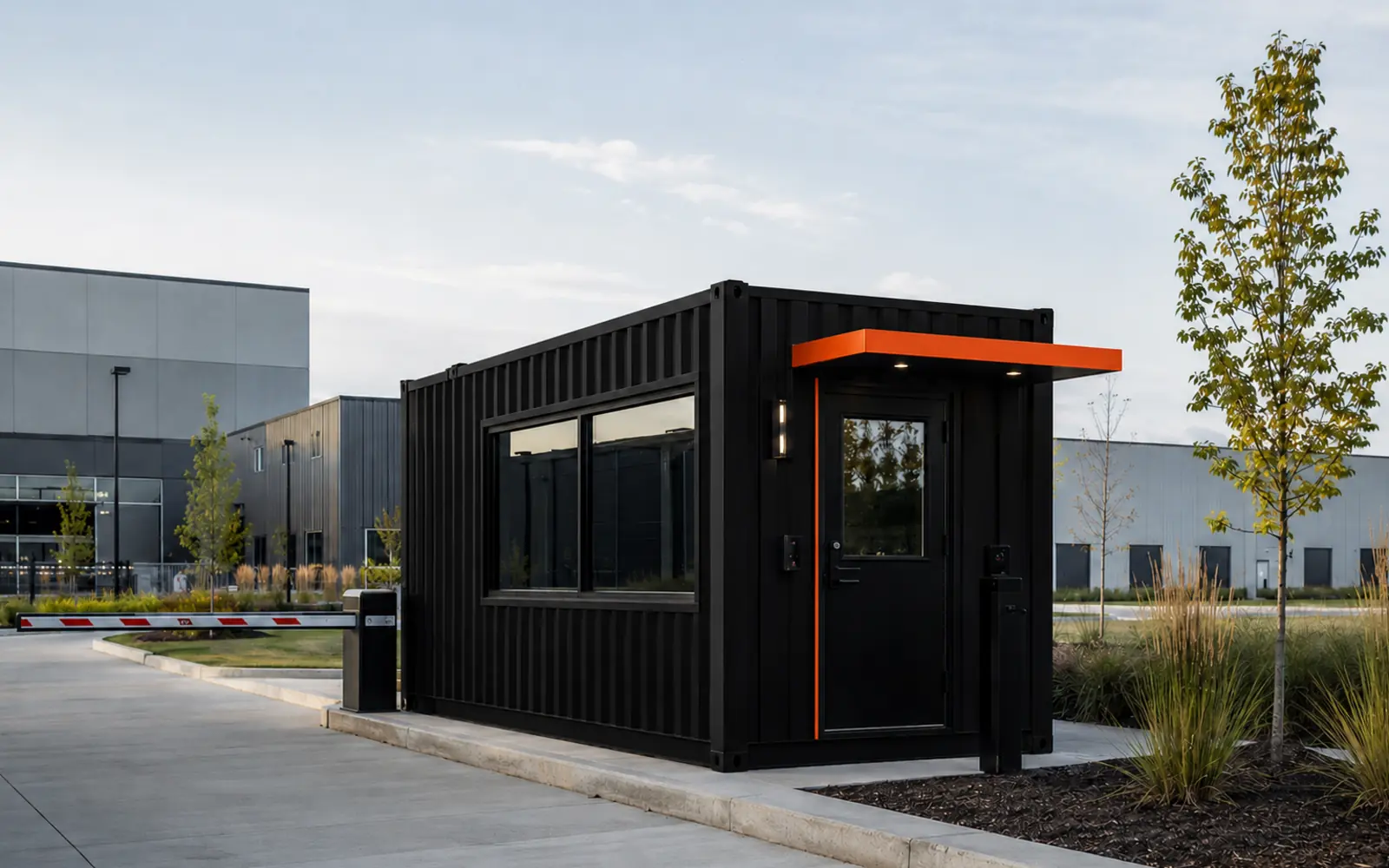
Built around the operation
Stronger checkpoints, smarter access.
A security post is the point where people, vehicles, information, and site rules meet. The Mod Shop creates guard booths, credentialing stations, turnstile containers, and command points that support visibility, communication, staff comfort, and technology integration. Each unit is configured around the specific entrance rather than a generic booth plan.
Operating priorities
Decisions that shape the build.
A useful modular unit starts with the site, workflow, equipment, people, and approval path—not a one-size-fits-all floor plan.
01
Sightlines and workflow come first
Window size alone does not create visibility. The plan must account for staff position, approach lanes, adjacent fencing, gates, lighting, equipment, and glare. We can locate glazing, transaction windows, doors, counters, and monitors around the views and interactions that matter most.
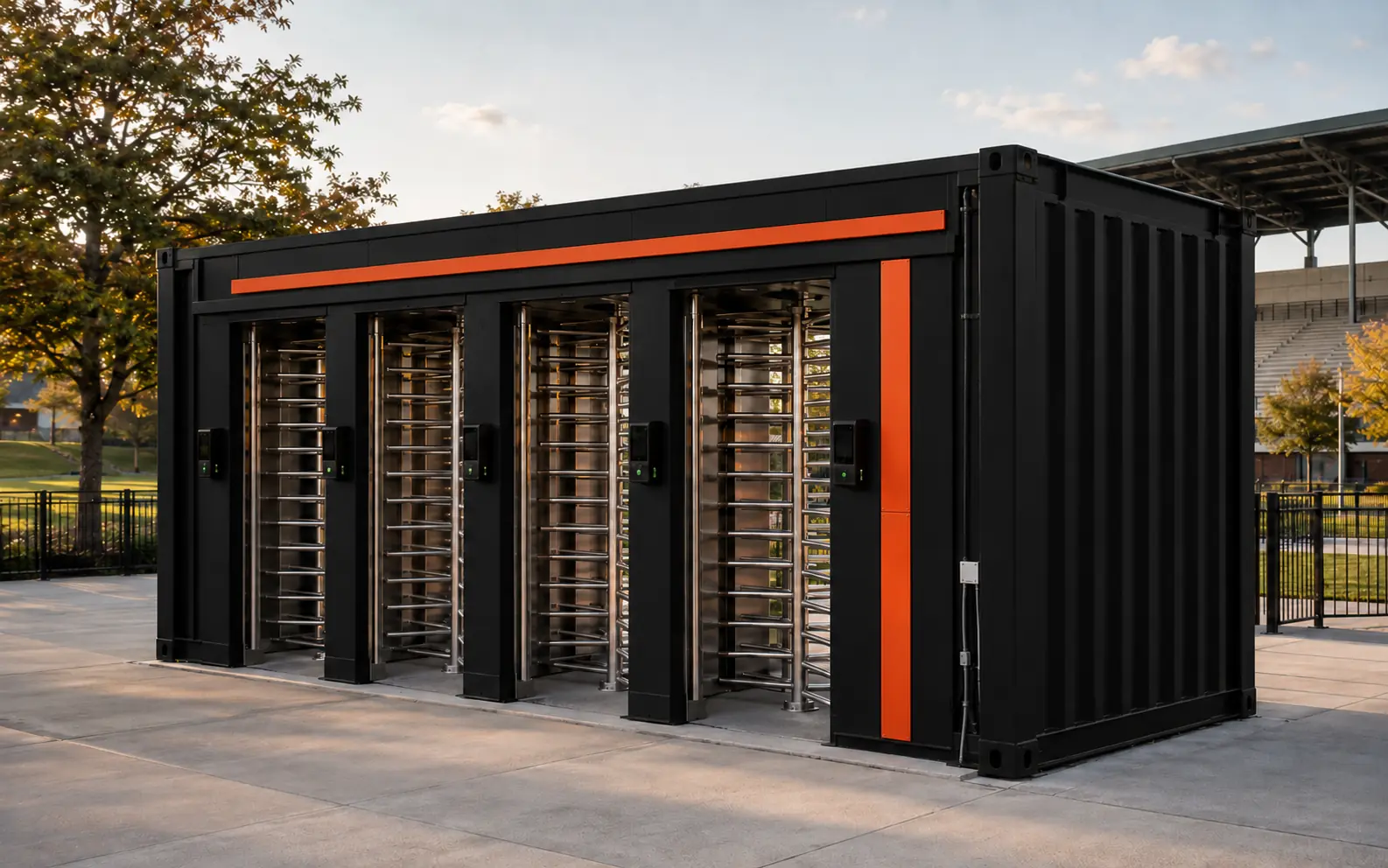
For pedestrian access, turnstile count, lane width, accessible bypass, credential readers, queuing, emergency egress, and staff response all shape the container. These interfaces should be coordinated with the owner’s security consultant and equipment vendors.
02
Support people and systems through every shift
Security teams may occupy a compact space for long periods. Insulation, HVAC, task lighting, ergonomic counters, storage, privacy, and restroom access influence performance and retention. Durable interior materials and serviceable equipment help keep the station operational.
Power, data, cameras, intercoms, card readers, gate controls, alarm panels, and backup systems require organized pathways and equipment zones. Early layouts help separate day-to-day work surfaces from critical technology.
- Lane-specific window placement
- Credential and communications pathways
- Controlled personnel access
- Protected equipment zones
03
Define the required protection level
A standard steel container is not automatically ballistic, forced-entry rated, blast resistant, or code compliant for a particular security use. If a project requires tested protective assemblies, the performance criteria and listed components must be identified before fabrication.
The owner’s security, design, and code professionals should establish risk criteria, egress, accessibility, electrical, foundation, fire, and site requirements. We then build to the documented container modification scope.
Common applications
Where these units go to work.
Every application is configurable. Size, openings, interior partitions, utilities, equipment, finishes, access, and delivery planning are matched to the project.
- 01Guard booths
- 02Turnstile lanes
- 03Security command points
- 04Credential stations
- 05Vehicle gates
- 06Visitor screening
Recommended platforms
Strong starting points for your scope.
Choose a product series or a proven solution, then configure it around your site and operation.
BIZ SERIES
BIZ Series
Office containers and security booths.
Explore series ↗GEN SERIESGEN Series
Modification packages for doors, windows, refurbishment, lighting, and temperature control.
Explore series ↗CUSTOM BUILDGuard Shacks
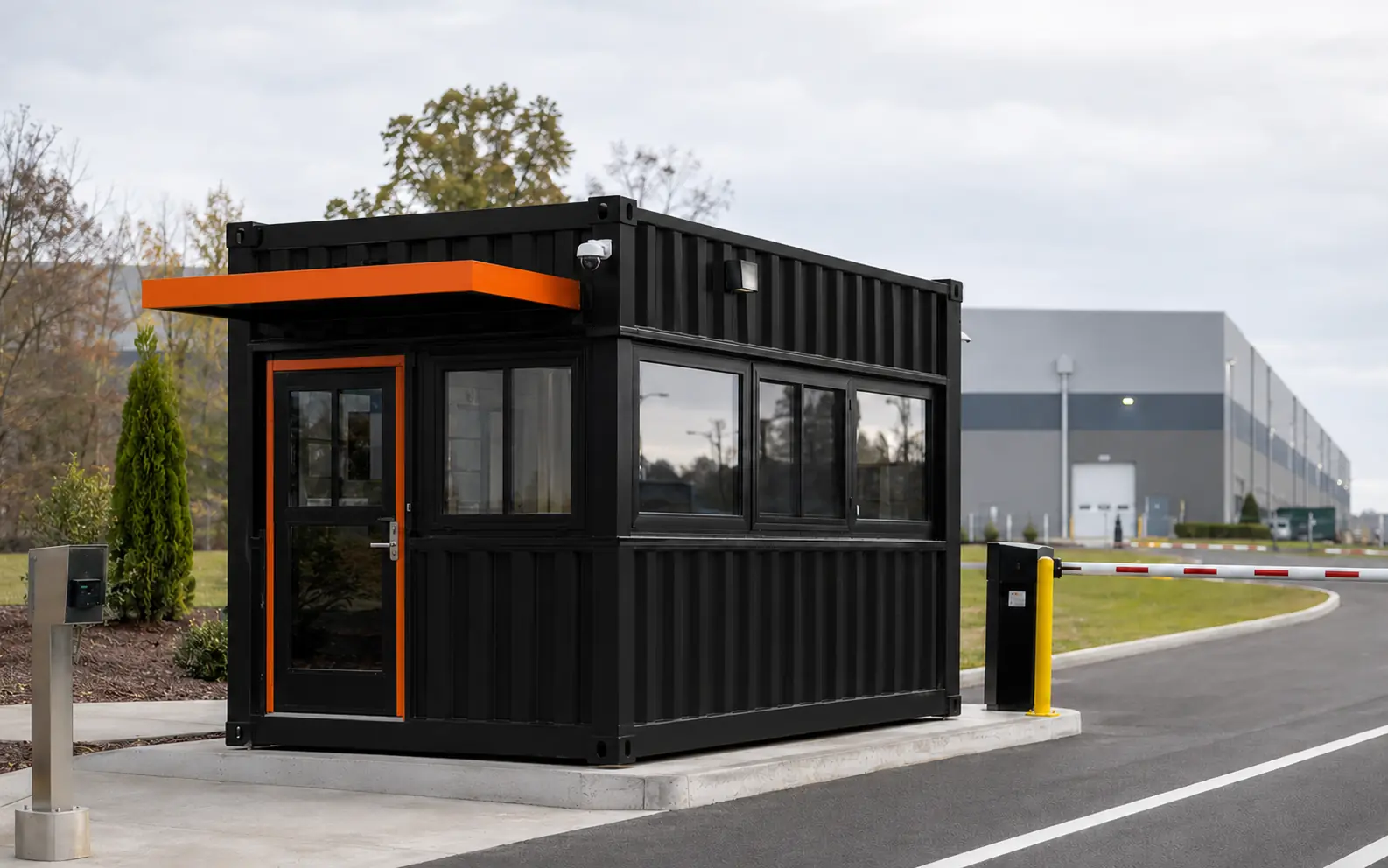
Secure checkpoint units designed to protect personnel, manage access, and keep critical entrances operating in every season.
Explore build ↗CUSTOM BUILDTurnstile Units
Integrated access units that combine rugged container construction with turnstiles, ticketing, and modern credential systems.
Explore build ↗Project questions
What teams ask before they build.
Can a guard booth have windows on all sides?+
Yes, subject to structure, energy performance, equipment locations, privacy, and the desired protection level. Reinforcement and glazing specifications are developed for the project.
Do you install access-control equipment?+
We can prepare openings, mounting surfaces, power, conduit pathways, and equipment zones. Final device installation and commissioning can be coordinated with the owner’s selected integrator.
Are the units ballistic rated?+
Only when a project explicitly specifies tested rated assemblies and those components are incorporated. Standard container construction should not be assumed to provide a ballistic rating.
Related industries
Explore connected applications.
Start with the operation
Tell us what the unit must do, where it will work, and what it needs to support.Plan your project ↗