← All industries
Public infrastructure
Municipal + Public Works
Practical facilities for public service.
Durable modular offices, restrooms, storage, and field-support units for parks, public works, utilities, and local agencies.
Built around the operation
Practical facilities for public service.
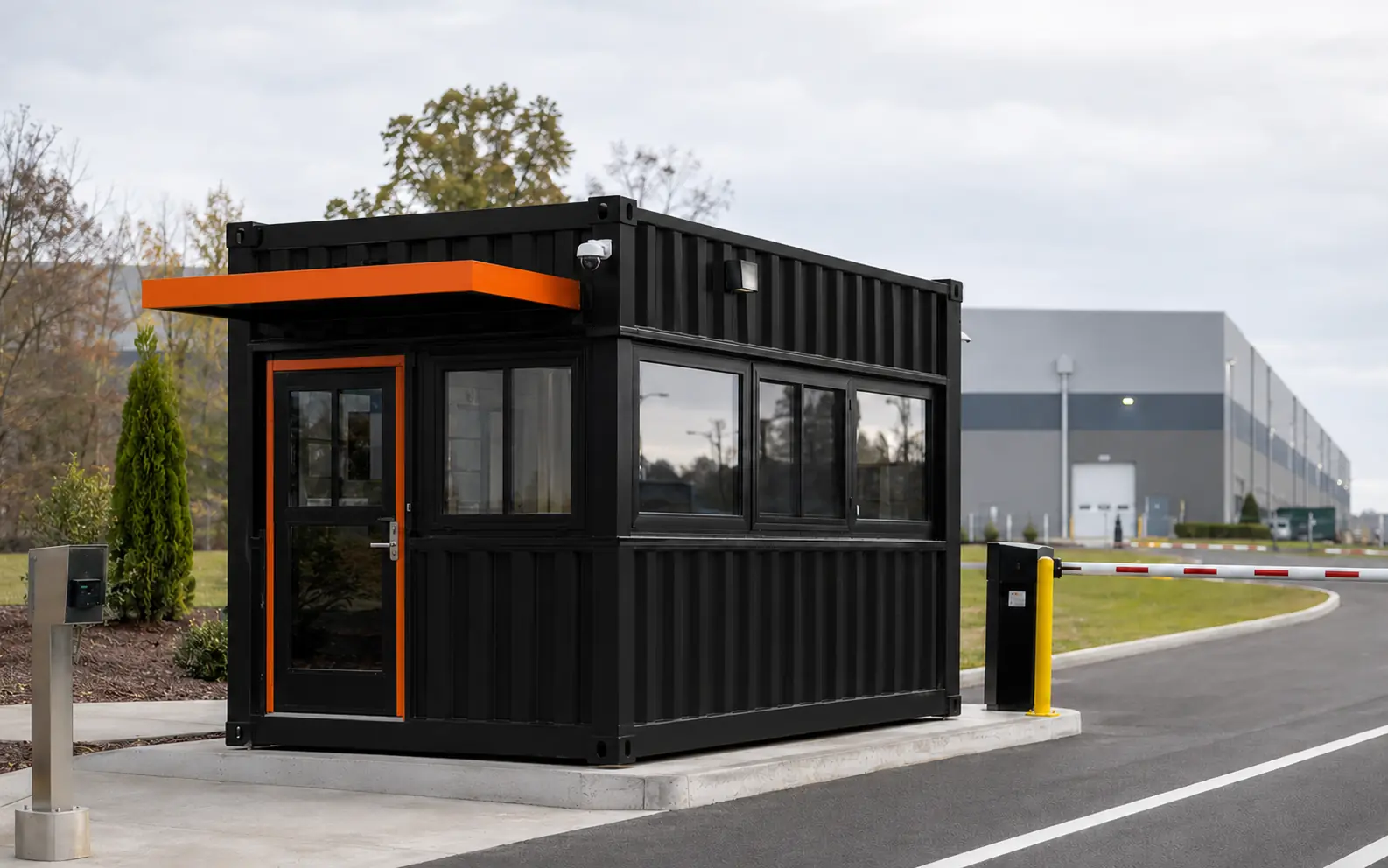
Municipal teams need facilities that are straightforward to operate, maintain, and procure. The Mod Shop builds container-based offices, storage units, comfort stations, checkpoints, and emergency-support spaces for parks departments, public works yards, utilities, and community operations. Each configuration can be documented around a defined use and repeatable specification.
Operating priorities
Decisions that shape the build.
A useful modular unit starts with the site, workflow, equipment, people, and approval path—not a one-size-fits-all floor plan.
01
Facilities shaped around public operations
A parks office, maintenance checkpoint, restroom, and emergency coordination unit may share the same steel platform, but each requires a different interior plan. Staff count, public interaction, privacy, cleaning, security, utilities, and hours of operation should drive the layout. We translate those operational needs into openings, rooms, finishes, fixtures, and system zones.
Where multiple departments need similar units, a standard base specification can reduce design repetition while allowing controlled project options. This can support phased capital programs, seasonal deployment, or replacement of outdated temporary structures.
02
Durable materials and maintainable details
Public facilities benefit from materials that tolerate frequent use and are easy to repair. Steel exterior construction, durable flooring, washable interior surfaces, protected fixtures, commercial doors, exterior lighting, and clear service access can reduce avoidable maintenance. Equipment locations should remain accessible without disrupting public areas.
For restroom and utility-heavy units, the project team should confirm water, sanitary, freeze protection, ventilation, and service connections early. Site civil work and utility capacity can influence both placement and cost.
- Washable interior finishes
- Secure doors and glazing
- Utility-ready service zones
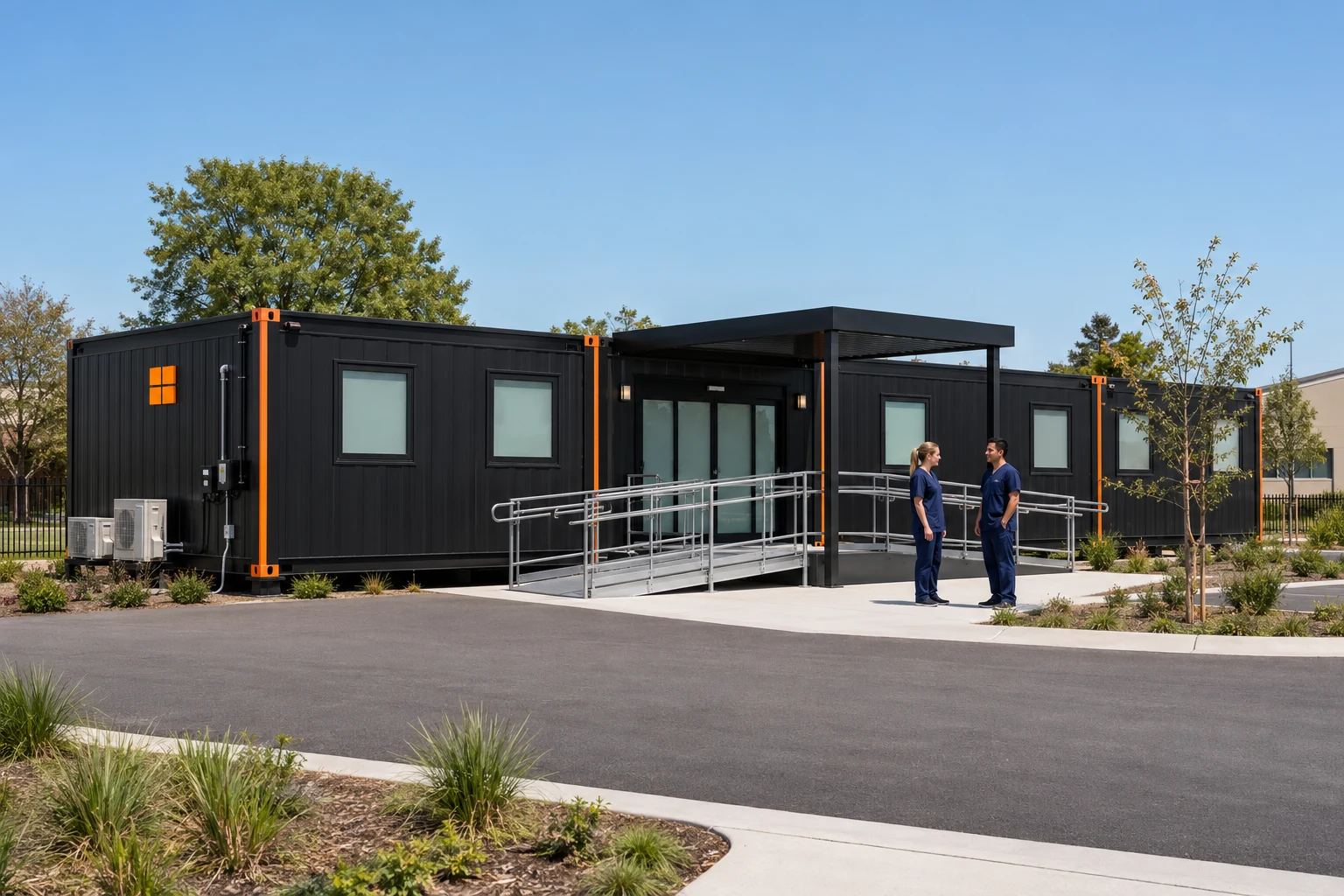
- Accessible layout planning
03
Procurement, permitting, and site coordination
Public projects often involve formal scopes, bid requirements, insurance, inspections, and multiple stakeholders. A clearly documented equipment and finish schedule helps agencies compare proposals and manage approvals. We can help define the modification scope and identify decisions needed before fabrication.
Accessibility, occupancy, plumbing, electrical, fire, structural, foundation, and zoning requirements vary. Municipal owners should involve their code officials and design professionals early; final approval rests with the local authority having jurisdiction.
Common applications
Where these units go to work.
Every application is configurable. Size, openings, interior partitions, utilities, equipment, finishes, access, and delivery planning are matched to the project.
- 01Parks offices
- 02Public works stations
- 03Modular restrooms
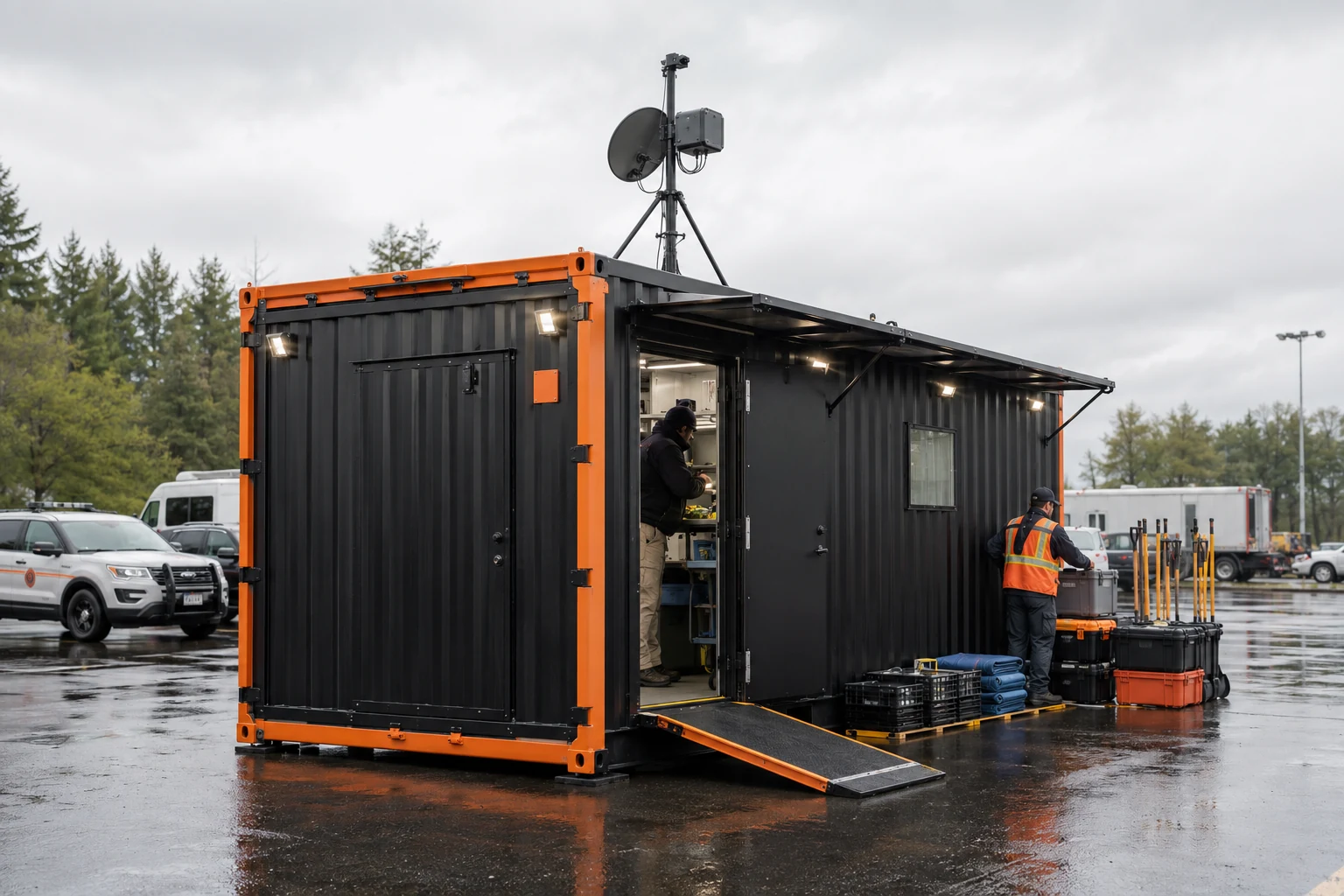
- 04Emergency support
- 05Utility field offices
- 06Secure records storage
Recommended platforms
Strong starting points for your scope.
Choose a product series or a proven solution, then configure it around your site and operation.
JOHN SERIES
JOHN Series
Modular restroom and portable sanitation facilities.
Explore series ↗BASE SERIESBASE Series
Basic container homes, guest houses, and backyard ADUs.
Explore series ↗CUSTOM BUILDOffice Containers
Turn durable steel into a comfortable, professional workspace configured around your crew, workflow, and site.
Explore build ↗CUSTOM BUILDGuard Shacks
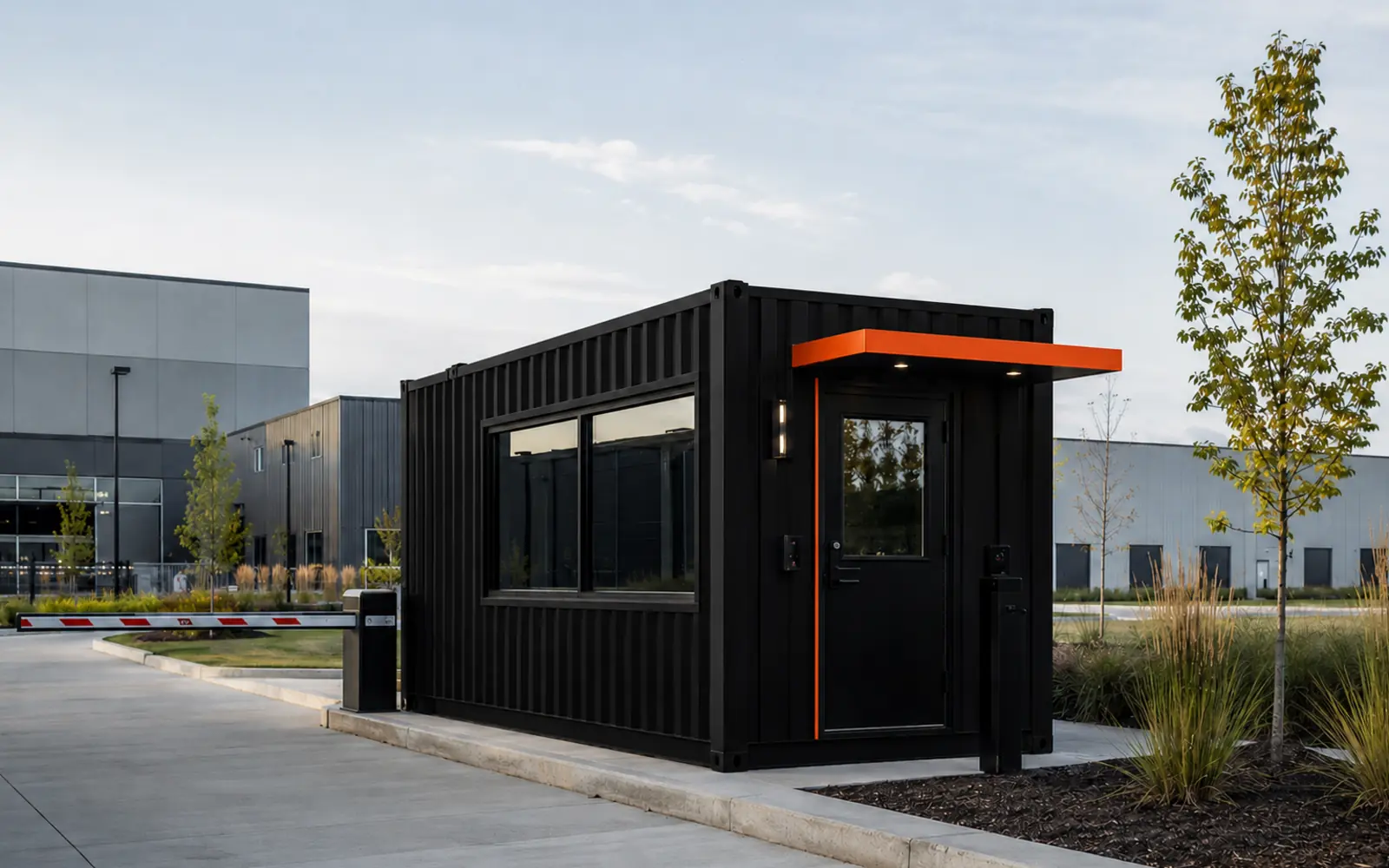
Secure checkpoint units designed to protect personnel, manage access, and keep critical entrances operating in every season.
Explore build ↗Project questions
What teams ask before they build.
Can municipal units be standardized?+
Yes. A base size, opening schedule, finish package, and utility approach can be standardized, with documented alternates for department-specific needs.
Are container buildings automatically code compliant?+
No single configuration is automatically approved everywhere. Use, occupancy, site, foundations, utilities, accessibility, and local amendments determine requirements. The project team must obtain local review and approvals.
Can units be configured for year-round use?+
Insulation, HVAC, plumbing protection, lighting, and envelope details can be selected for all-season operation, subject to project-specific design and utility conditions.
Related industries
Explore connected applications.
Start with the operation
Tell us what the unit must do, where it will work, and what it needs to support.Plan your project ↗